Sunday, June 22, 2014

Mexico & Stuff: Simple Present


Go Mexico!


Mexico vs. Croatia: Today @ 3:00pm

Simple Present: http://www.grammar.cl/Present/Simple.htm 
                                                READ THIS!


1. http://www.juntadeandalucia.es/averroes/torredelprado/ingles/present_simple1.htm
2. http://www.englishmaven.org/HP6/Present%20Tense%20Exercise%206.htm
3. http://www.englishmaven.org/HP6/Present%20Tense%20Exercise%201.htm
4. http://www.englishmaven.org/HP6/Present%20Tense%20Exercise%202.htm
5. http://www.englishmaven.org/HP6/Present%20Tense%20Exercise%203.htm
6. http://www.englishmaven.org/HP6/Present%20Tense%20Exercise%204.htm
7. http://www.montsemorales.com/gramatica/PresSimp1.htm
8. http://www.eflnet.com/grammar/presentagreement.php#.U6dIf7FACkw


Railway System of Mexico


Click the link to watch a video about Mexico's Ferronautas: Two brothers traveling back in time using Mexico's abandoned rail lines

http://www.bbc.com/news/magazine-27929846?SThisFB


Partly Cloudy

Storks are birds that, according to legend, deliver babies. Watch this video about how all Earth's animals are made and the consequences it has for their delivery birds:


Food in Mexico

Mexico is known worldwide for its tasty food. In fact, Mexican Cuisine was declared a part of our Intangible Cultural Heritage by UNESCO. Here is one minute of our patrimony created by Daniel Klein from the United States.


Mexican food is incredibly delicious but if you pick just one dish, what would it be?

Mexico is known for their copious use of chile in everything, including candy. This may be a sweet snack for you but to foreigners it is a flavor combination that could take some getting used to. Watch this video about gringos trying some chile flavored sweets.


Sunday, June 8, 2014

WORLD CUP!


Complete the following exercises:

1. http://www.ego4u.com/en/cram-up/grammar/simple-past/exercises?03
2.http://www.englishexercises.org/makeagame/viewgame.asp?id=2023
3. http://www.montsemorales.com/gramatica/Pastsimplebe.htm
4. http://s.mound.free.fr/skyblues67/simppast/wascloze.htm
5. http://www.eflnet.com/grammar/tobepast.php#.U5UxgShACkw

Read the article and answer the questions: 

"The British have been credited with bringing football to Argentina in the 19th century.
The rivalry between the England and Argentina national football teams, however, is generally traced back to the 1966 FIFA World Cup. Outside football, the Falklands War in 1982 increased the mistrust between England and Argentina. The Falkland Islands, situated in the South Atlantic Ocean is an overseas British territory, which is claimed by Argentina as its own, as the Islas Malvinas. On April 2 of 1982, Argentina's forces invaded the islands. The British considered this an invasion of its territory and sent a naval task force that recaptured the Islands on June 14 of 1982. Though the two nations were never officially at war, the conflict resulted in 258 British and 655 Argentinian deaths. As a result, the match taking place just four years after the war was emotionally charged. Following the game, Maradona stated: "Although we had said before the game that football had nothing to do with the Malvinas war, we knew they had killed a lot of Argentine boys there, killed them like little birds. And this was revenge."

Six minutes into the second half, Maradona scored a goal using his hand.
Maradona later said, "I was waiting for my teammates to embrace me, and no one came... I told them, 'Come hug me, or the referee isn't going to allow it.'"
At the post-game press conference, Maradona commented that the goal was scored "un poco con la cabeza de Maradona y otro poco con la mano de Dios" ("a little with the head of Maradona and a little with the hand of God"),which indirectly helped English tabloids coining the phrase "Hand of God". The goal helped intensify the footballing rivalry between the two nations: the English now felt that they had been cheated out of a possible World Cup victory, while the Argentinians enjoyed the manner in which they had taken the lead.


Just four minutes after the Hand of God goal, however, came The Goal of the Century, so called because it is often claimed to be the greatest individual goal of all time.Héctor Enrique passed the ball to Maradona some ten metres inside his own half. Maradona then began his 60-metre, 10-second dash towards the English goal, passing four English outfield players – Peter Beardsley, Peter Reid, Terry Butcher (twice) and Terry Fenwick. Maradona finished the move by dribbling round Shilton and slotting into the net to make the score 2–0 to Argentina.
In 2002, the goal was voted 'Goal of the Century' as part of the buildup to the 2002 FIFA World Cup tournament on the FIFA website."
Source: http://en.wikipedia.org/wiki/Argentina_v_England_%281986_FIFA_World_Cup%29

Answer the following questions:

What war made this game emotionally charged?

Where are the islas malvinas and what do they call them in English?

Was the "Hand of God" cheating and why?

Do you think Maradona's second goal is the "Goal of the Century"?

What did Maradona say about the "Hand of God" goal?


Sunday, June 1, 2014

Complete the Following Activities


Welcome to my English blog


Complete the following activities.

1. http://www.montsemorales.com/gramatica/tobe1.htm
2. http://www.kico4u.de/english/uebungen/5klasse/becon.htm 
3. http://www.juntadeandalucia.es/averroes/ceip_san_tesifon/recursos/ingles/act_interactivas/cuestionarios/tobe0.htm
4.  http://michel.barbot.pagesperso-orange.fr/cap/be_have/exo0.htm

Read the following biography and answer the questions on a separate sheet of paper.
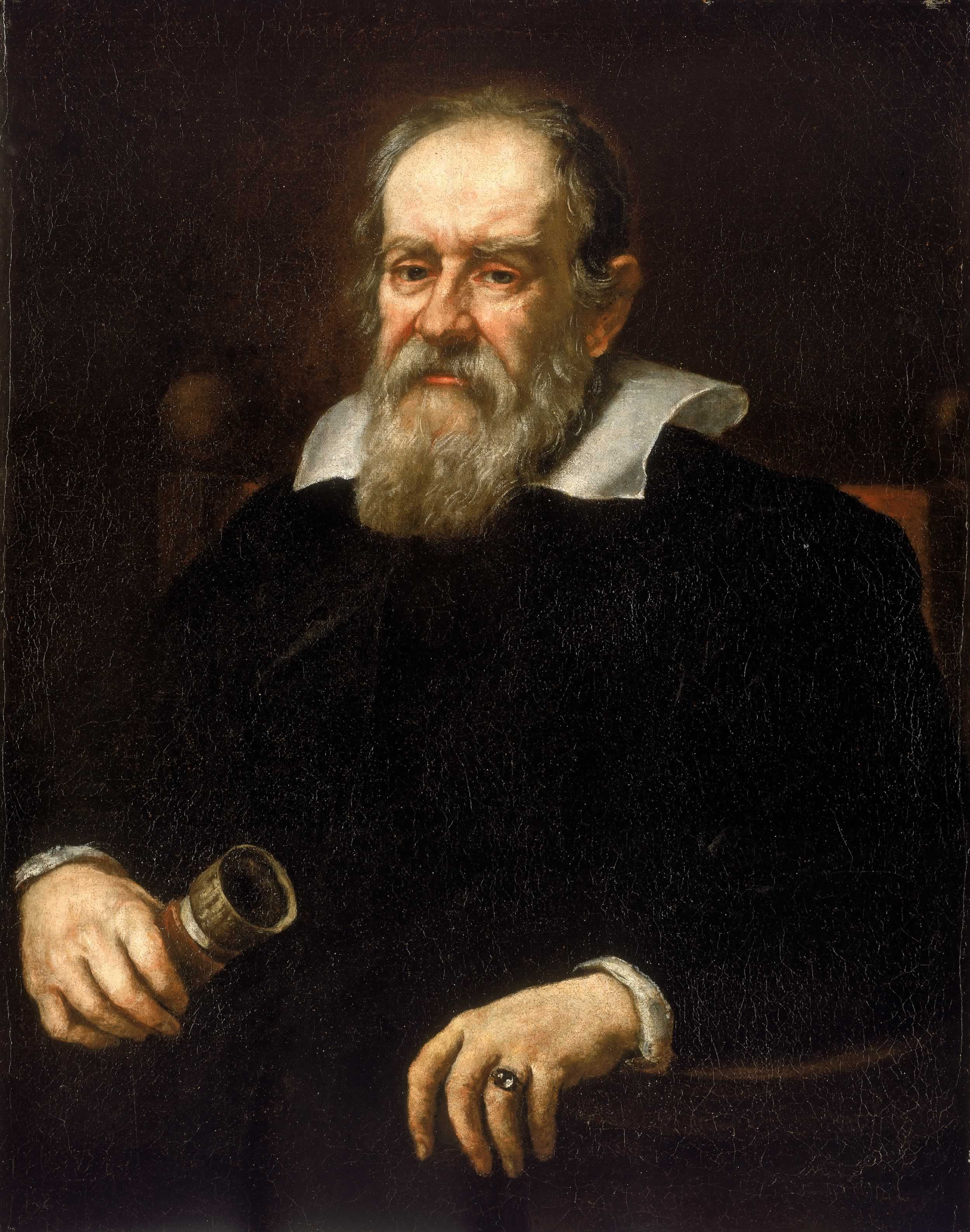
Galileo Galilei
 
Galileo Galilei was born in the year 1564. He was born in the town of Pisa, in what is now Italy. When he was 20 years old, he was studying in Pisa. His father wanted him to be a
doctor. Galileo was bored with school. The only subject he really liked was math. Because he was doing well in math, the court mathematician offered to tutor him privately He said he
could become a qualified mathematician. Galileo’s father was disappointed, but he agreed.
Because he needed to earn money, Galileo began experimenting with different things. He tried to come up with an invention he could sell for money. He had some success
with one invention. It was like a compass that could be used to measure land. He experimented with pendulums, thermometers, and magnets. 
 
He heard that a Dutch inventor had invented something called a spyglass. The inventor was trying to keep it a secret.Galileo decided to work on one of his own. Within 24 hours,
he had invented a telescope.It could magnify things to make them appear ten times larger than real life. One night, he pointed his telescope toward the sky. He made his fi rst of many
space observations. Everyone thought the moon was smooth. Galileo saw that it wasn’t. The moon was covered in bumps and craters. As technology has improved, Galileo and many others have made improvements on the telescope. Today, the telescope is a wonderful device that lets us see objects far, far away.
 
1. Galileo’s father was disappointed when he became a mathematician. What did he want him to be instead? 

2. Why did Galileo become an inventor?

3. Where did Galileo get the idea for his telescope?

4. What did Galileo discover about the moon?

5. Do you think Galileo’s inventions made a difference in the world? How?


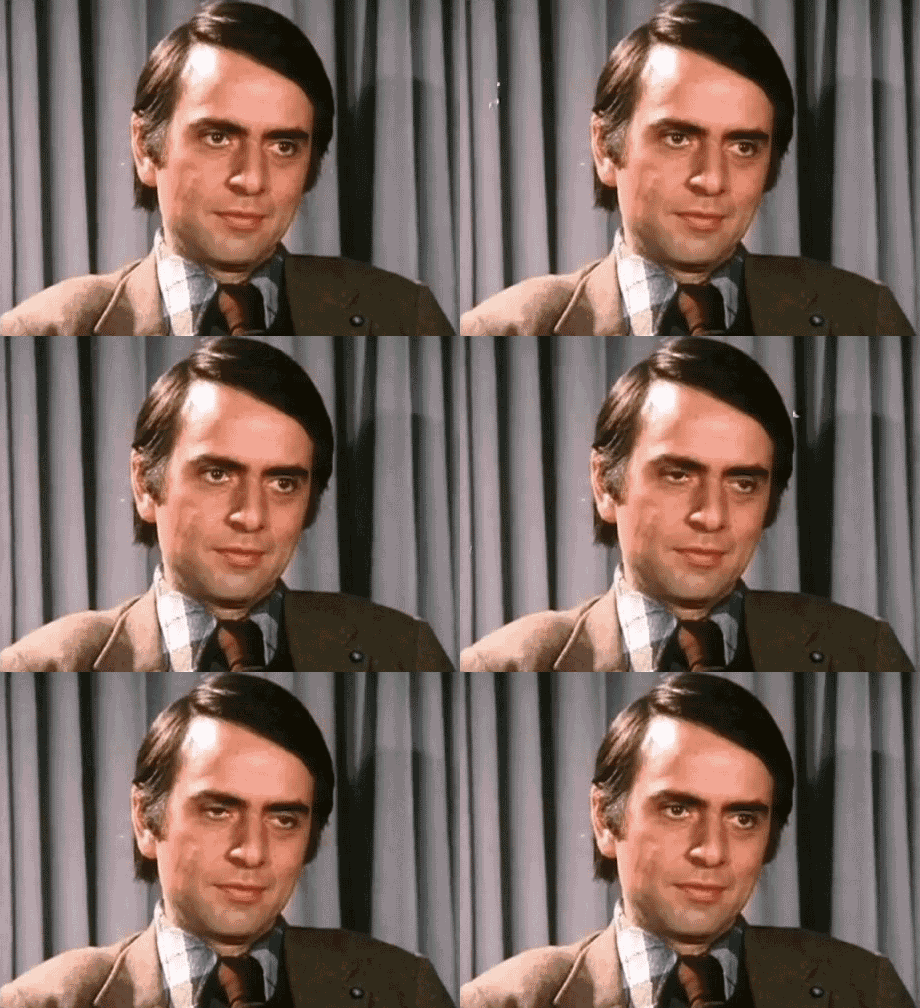
Watch the following video of a speech by astronomer Carl Sagan--


Answer the following questions:

1. Why is it important to respect others?

2. Why is it important to respect the planet?

3. Who is Carl Sagan?

4. What does it mean to be human?

5. How can you make a difference?